
In the Healthcare industry, person-centred planning does not meet OHS needs.
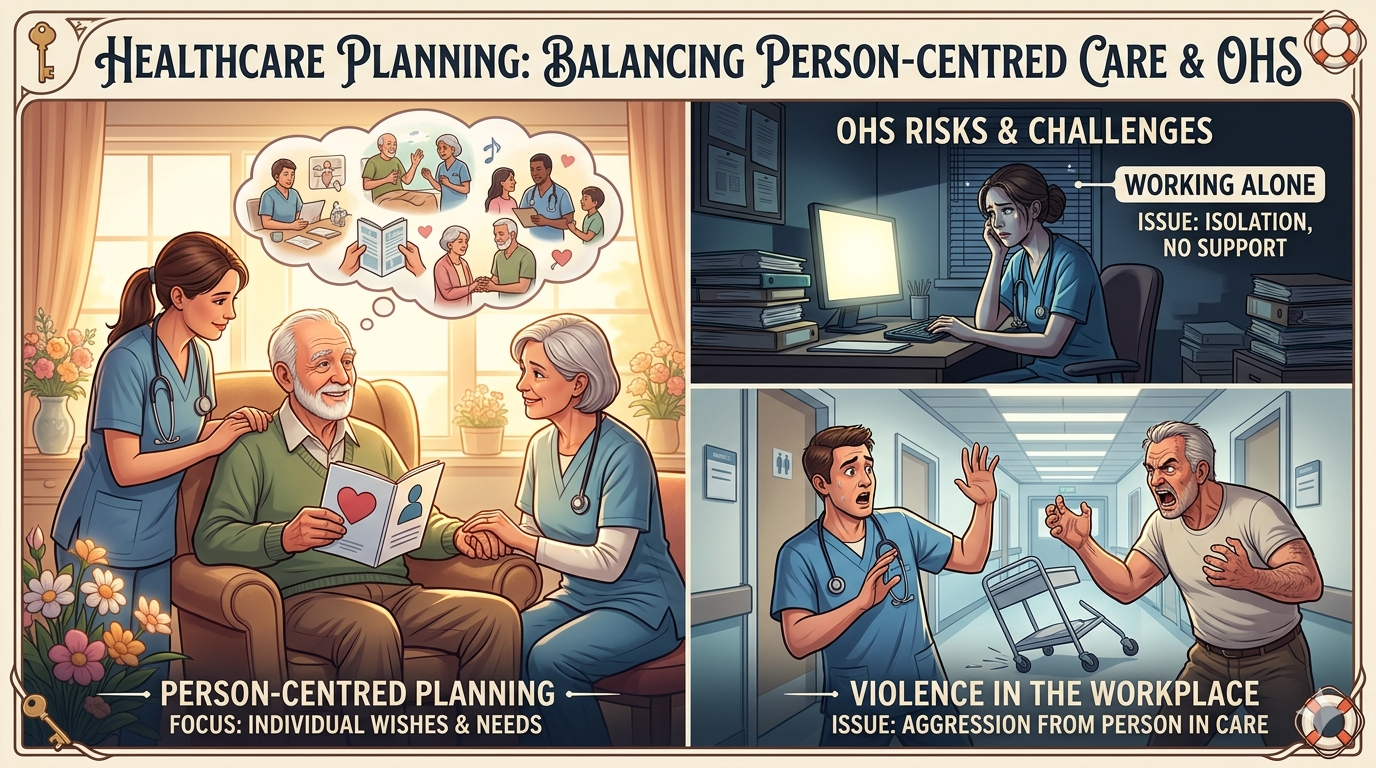
In the high-stakes world of human services, there is a quiet but devastating friction point that most leaders miss. You’ve likely mastered Person-Centered Planning, ensuring that the individuals you support live with dignity, autonomy, and privacy. But here is the reality: your commitment to clinical excellence may be creating a legal and psychological "blind spot" that is costing your organization its most valuable asset—its people.
The gap lies in the failure to integrate Occupational Health and Safety (OHS) mandates directly into the fabric of Person-Centered Planning. Too often, these two frameworks are treated as parallel lines that never meet. We prioritize the "clinical file" and the "privacy of the person," but in doing so, we inadvertently starve the frontline staff of their statutory Right to Know regarding foreseeable hazards.
When a person in care has a history of violent behavior, that history is not just a clinical data point; under OHS Acts, it is a recognized workplace hazard. By treating this information as purely confidential to protect the "dignity" of the individual, you are essentially asking your employees to walk into high-risk situations blindfolded.
This isn't just a physical safety issue; it is a massive liability. Under WorkSafeBC and CSA Z1003 standards, this lack of transparency is a primary driver of psychosocial hazards. When staff—and especially "tokenized" contractors who are often left out of the inner loop—feel that their safety is secondary to clinical optics, the result is hyper-vigilance, burnout, and trauma.
The cost of this blind spot is hidden in your bottom line: skyrocketing insurance premiums, high staff turnover, and the legal risk of failing to exercise due diligence. If an injury occurs and it is proven that management withheld hazard information to preserve a "person-centered" aesthetic, "clinical best practice" will not hold up as a legal defense against OHS violations.
Integrating these two worlds is not about "institutionalizing" care; it is about Integrated Risk Management. It means evolving your Person-Centered Planning to include robust, transparent behavioral risk assessments that fulfill the Internal Responsibility System. True dignity for the person served cannot exist in an environment where the caregiver is at unknown risk. It’s time to close the gap before the cost of your blind spot becomes a permanent liability.
